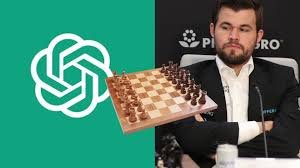
In a fascinating clash between human intellect and artificial intelligence, Magnus Carlsen, the reigning world chess champion, once again demonstrated the superiority of human strategic thinking over machine learning models. Carlsen managed to defeat ChatGPT, a language model AI, in a chess game without losing a single piece, showcasing the intricate balance of skill and strategy that defines top-level chess.
The chess duel, shared through screenshots by Carlsen himself, captured the attention of the chess community and tech enthusiasts alike. The AI, while capable of forming coherent moves based on its training data, fell short in the nuanced execution required for high-level chess, conceding defeat after 53 moves. This match wasn’t just about Carlsen’s victory but also highlighted the limitations of current AI models like ChatGPT when it comes to specialized tasks.
AI’s Role in Chess: A Double-Edged Sword
Artificial intelligence has long been a part of chess, with specialized engines like Stockfish setting the benchmark for computer chess. However, ChatGPT, primarily designed for natural language processing, approached the game differently. While it provided an impressive opening strategy, it struggled to maintain tactical sharpness throughout the game, which Carlsen adeptly exploited.
This match underscores a crucial point: while AI can assist in analyzing and executing moves, it lacks the intuitive grasp and foresight that seasoned human players possess. Carlsen’s victory serves as a testament to the enduring complexity of chess, where human intuition and experience remain invaluable.
The Broader Implications of AI in Specialized Fields
The interaction between Carlsen and ChatGPT isn’t just about chess; it reflects on the broader capabilities and limitations of AI in specialized fields. While AI can process vast amounts of data and recognize patterns, it often lacks the nuanced understanding required in expert-level tasks. This limitation is evident not only in chess but also in fields like medicine, where AI can assist with diagnostics but cannot replace the expertise of a trained physician.
As AI continues to evolve, its integration into various sectors will likely grow. However, the necessity of human oversight and decision-making remains critical, especially in areas where complexity and unpredictability are inherent.
Conclusion
Magnus Carlsen’s triumph over ChatGPT is a reminder of the unique human qualities that AI has yet to replicate. While AI can enhance and support human efforts, it is not yet a replacement for the depth of understanding and adaptability that humans bring to complex tasks. As technology advances, maintaining a symbiotic relationship between AI and human expertise will be crucial, ensuring that both can complement each other in pushing the boundaries of what is possible.