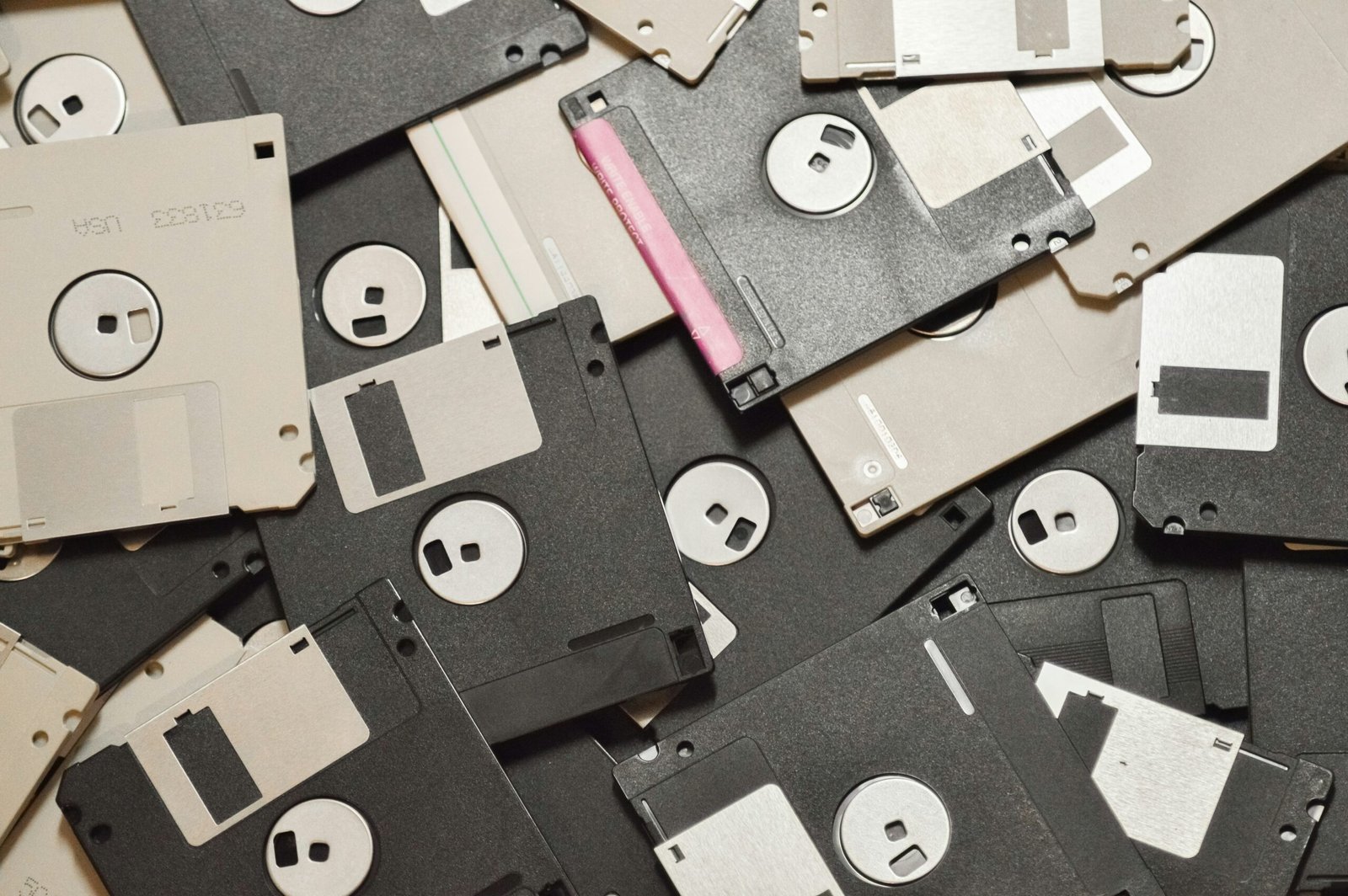
In an era of rapid technological evolution, yesterday’s cutting-edge storage solutions become today’s digital archaeology challenges. Floppy disks—once revolutionary storage devices that defined personal computing from the 1970s through the 1990s—now sit dormant in archives and attics, harboring irreplaceable data that teeters on the brink of permanent loss. Cambridge University Library’s ambitious data recovery initiative illuminates a critical threat facing our digital age: the emergence of a “digital dark age” where entire repositories of human knowledge could vanish without a trace.
The Technical Challenge
Floppy disks present a paradox of preservation. While their plastic shells remain physically intact decades after creation, the magnetic media within faces inevitable decay. The iron oxide coating that stores data gradually deteriorates through magnetic field degradation, temperature fluctuations, and simple aging—creating a ticking clock for data recovery specialists. Unlike modern solid-state storage, floppy disks require functioning mechanical drives that are increasingly rare, along with compatible operating systems that can interpret decades-old file formats.
Racing Against Time
The stakes couldn’t be higher. These seemingly obsolete storage devices contain irreplaceable historical documents—from Stephen Hawking’s groundbreaking theoretical physics calculations to crucial political correspondence that shaped policy decisions. Each disk represents a potential window into pivotal moments in recent history, yet accessing this information demands expertise in obsolete computing systems and data formats that few specialists still possess.
“If you’ve got a book, it doesn’t matter how old it is – you can still read it,” notes Leontien Talboom from Cambridge’s digital preservation team. “With floppy disks, however, you need specialized equipment just to access the content itself.”
Lessons from History’s Lost Knowledge
This digital preservation crisis echoes historical patterns of knowledge loss. Ancient libraries burned, manuscripts crumbled, and entire civilizations’ contributions disappeared until archaeologists painstakingly reconstructed fragments centuries later. Today’s digital dark age threatens to repeat this cycle on an unprecedented scale—but with a crucial difference: we have the opportunity to prevent it.
The fragility of digital storage formats becomes particularly stark when compared to analog predecessors. While papyrus scrolls from ancient Egypt remain readable after millennia, computer files from just 30 years ago risk becoming permanently inaccessible as the hardware and software needed to interpret them vanishes from existence.
Building Bridges to Digital Heritage
Cambridge’s preservation efforts represent more than data recovery—they’re establishing crucial infrastructure for digital archaeology. By developing techniques to extract, convert, and preserve legacy data formats, these initiatives create pathways for future researchers to access primary sources that would otherwise be lost. This work requires not just technical expertise, but also historical context to properly catalog and interpret recovered materials.
The implications extend beyond academic research. Corporate archives, government records, and personal collections stored on obsolete media face similar preservation challenges. As digital storage continues evolving at breakneck speed, today’s cutting-edge formats will inevitably become tomorrow’s preservation puzzles.
Securing Our Digital Future
The race to preserve floppy disk data serves as both rescue mission and cautionary tale. It underscores the urgent need for proactive digital preservation strategies that anticipate technological obsolescence rather than react to it. As we generate exponentially more digital content, establishing sustainable preservation frameworks becomes critical to preventing future digital dark ages.
This preservation work ultimately ensures that our rapid technological progress doesn’t come at the cost of losing our digital past—maintaining the continuous thread of human knowledge that connects yesterday’s innovations to tomorrow’s breakthroughs.