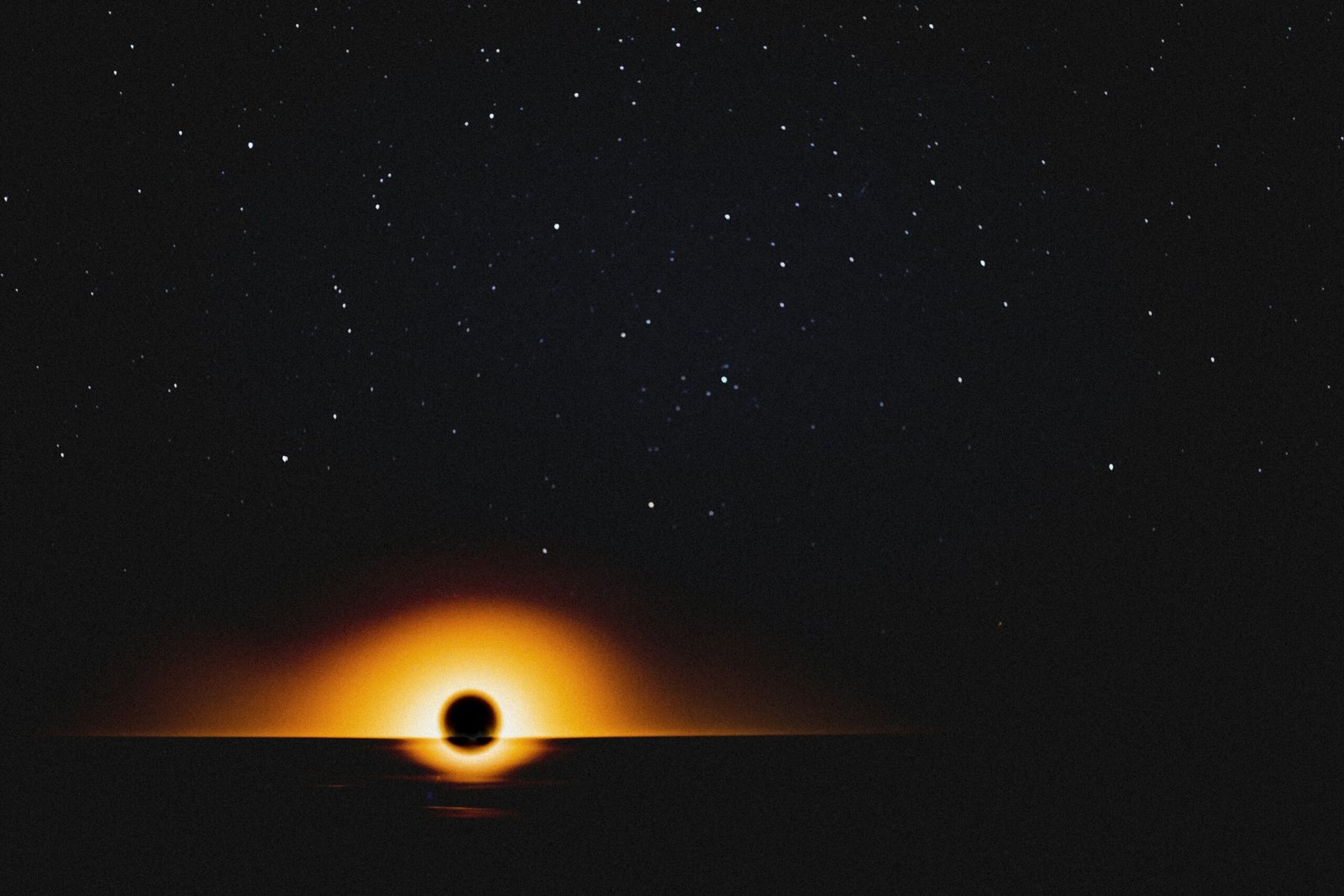
Black holes, among the universe’s most enigmatic phenomena, continue to reshape our understanding of cosmic mechanics and fundamental physics. Recent breakthroughs are revealing their multifaceted roles—from potentially solving a 60-year-old cosmic mystery to serving as the gravitational architects of galaxies. Far from being mere cosmic vacuum cleaners, these extreme objects are emerging as essential drivers in the universe’s evolution and possible gateways to revolutionary physics.
Solving the Ultra-High-Energy Cosmic Ray Mystery
For over six decades, astrophysicists have grappled with one of cosmology’s most perplexing puzzles: the origin of ultra-high-energy cosmic rays. These subatomic particles streak through space at velocities approaching light speed, carrying energies that dwarf anything achievable in Earth’s most powerful accelerators. Researchers at the Norwegian University of Science and Technology have proposed a compelling solution: supermassive black holes may be the cosmic particle accelerators we’ve been seeking.
The mechanism involves the relativistic winds generated by these black holes—plasma streams that can reach half the speed of light. These winds create natural particle accelerators on scales impossible to replicate artificially, potentially explaining how cosmic rays achieve such extraordinary energies. This discovery could finally close the book on one of astrophysics’ longest-standing mysteries.
Black Holes as Galactic Architects
Modern astrophysics has fundamentally revised our understanding of black holes’ role in galactic evolution. Rather than passive gravitational sinks, they function as active regulators of cosmic structure. Sagittarius A*, the Milky Way’s central supermassive black hole, exemplifies this dynamic relationship.
Through complex feedback mechanisms, black holes control star formation rates across their host galaxies. When actively feeding, they generate powerful jets and winds that can either trigger star birth by compressing nearby gas clouds or halt it entirely by heating and dispersing stellar nurseries. This regulatory function makes black holes indispensable to understanding why galaxies appear as they do today, rather than as uniform distributions of stars and gas.
The Path to Quantum Gravity
Perhaps most tantalizing is black holes’ potential role in achieving physics’ ultimate goal: unifying general relativity with quantum mechanics. At black hole singularities, Einstein’s equations break down, creating natural laboratories where quantum effects might dominate gravitational phenomena.
Recent theoretical advances suggest that quantum corrections to classical gravity could resolve the mathematical infinities that plague our current understanding of these extreme environments. While still highly speculative, this research represents humanity’s best hope for developing a theory of quantum gravity—what many physicists consider the “holy grail” of theoretical physics. Success would revolutionize our understanding of space, time, and matter itself.
Key Takeaways
- Supermassive black holes may finally explain the 60-year mystery of ultra-high-energy cosmic rays through their relativistic winds.
- Black holes actively shape galactic evolution by regulating star formation and gas dynamics across cosmic scales.
- Quantum effects near black hole singularities could provide the key to unifying general relativity and quantum mechanics.
Conclusion
Black holes have evolved from theoretical curiosities to central players in cosmic evolution and fundamental physics. They offer solutions to longstanding mysteries while opening new frontiers in our quest to understand reality’s deepest principles. As observational technology advances and theoretical frameworks mature, these extreme objects will likely continue surprising us, potentially holding keys to questions we haven’t yet learned to ask. In the grand cosmic narrative, black holes are not endpoints but beginnings—gateways to understanding the universe’s most profound secrets.