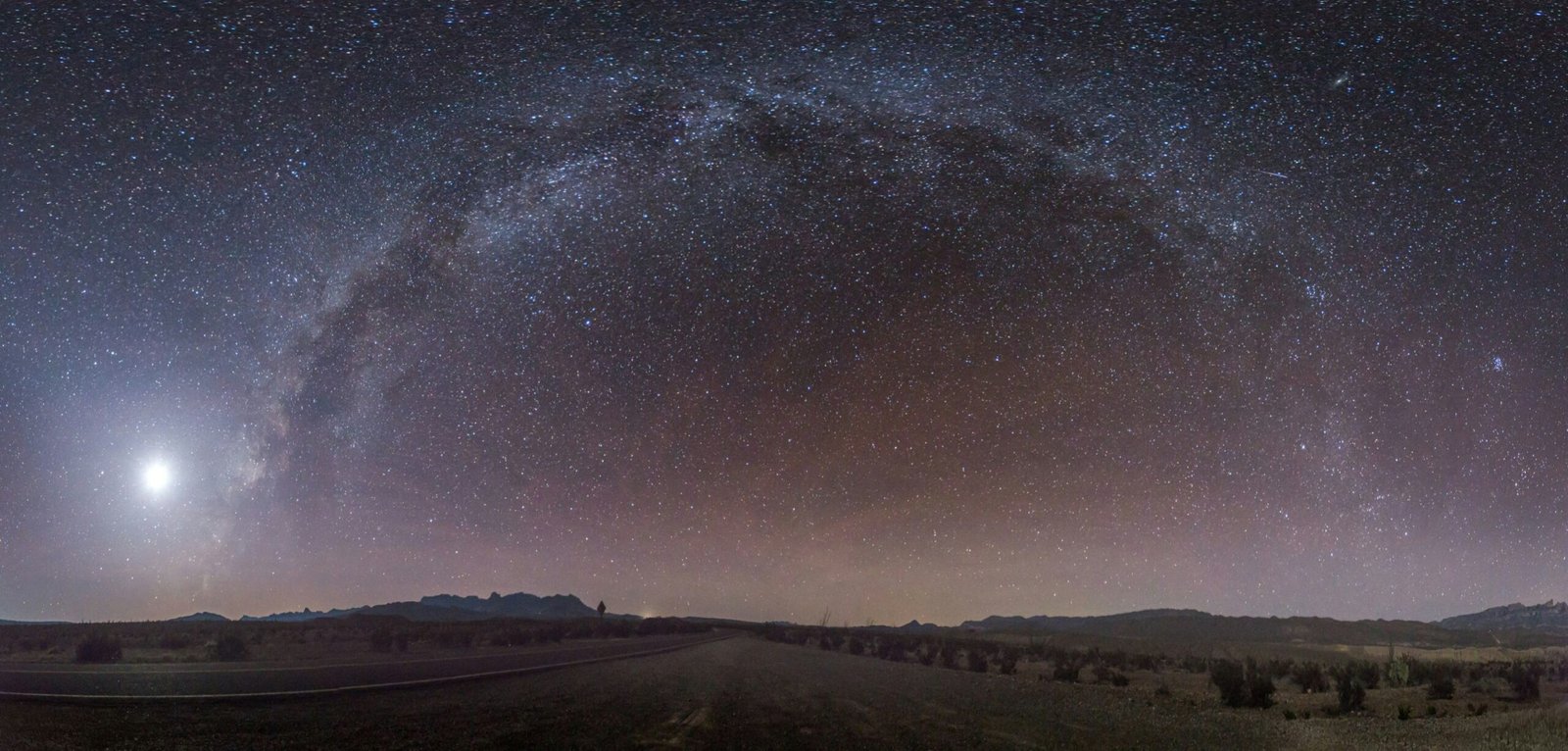
The discovery of interstellar objects has revolutionized astronomy in recent years, offering unprecedented windows into the cosmos beyond our solar system. From the enigmatic ‘Oumuamua to the chemically peculiar 2I/Borisov and the mysterious Punctum, these celestial visitors are rewriting our understanding of interstellar space and challenging fundamental assumptions about cosmic phenomena.
Punctum: A Cosmic Anomaly
Deep within the galaxy NGC 4945, astronomers have identified one of the most perplexing objects ever detected: Punctum. This extraordinary entity defies conventional classification, visible exclusively in millimeter radio wavelengths while remaining completely invisible across all other electromagnetic spectra. What makes Punctum truly remarkable is its energy output—radiating power levels that dwarf even the most energetic supernovae and magnetars, yet maintaining the compact footprint of a stellar remnant.
The object’s highly organized magnetic field structure adds another layer of mystery. Unlike the chaotic magnetic environments typically associated with high-energy astrophysical phenomena, Punctum exhibits a coherent, almost engineered magnetic architecture. This unprecedented combination has left researchers grappling with fundamental questions: Is this a previously unknown type of magnetar? Could it represent an entirely new class of astrophysical object? The answers may reshape our understanding of stellar evolution and cosmic energy production.
The Interstellar Pioneers: ‘Oumuamua and 2I/Borisov
‘Oumuamua’s arrival in 2017 marked a watershed moment in astronomy—humanity’s first confirmed encounter with an interstellar visitor. Its cigar-shaped profile, measuring roughly 400 meters long and 40 meters wide, immediately distinguished it from typical solar system objects. More intriguingly, ‘Oumuamua exhibited non-gravitational acceleration as it departed our solar system, a behavior that sparked intense scientific debate and speculation about its composition and origin.
The second confirmed interstellar visitor, 2I/Borisov, arrived in 2019 with its own set of revelations. Unlike ‘Oumuamua’s rocky appearance, Borisov displayed clear cometary characteristics, complete with a distinctive tail and coma. However, observations by the James Webb Space Telescope revealed an extraordinary chemical signature: an unusually high carbon dioxide-to-water ratio that suggests formation in the frigid outer regions of an alien star system. This composition offers a rare glimpse into the diverse planetary formation processes occurring throughout the galaxy.
Controversial Theories and Scientific Speculation
The unusual properties of these interstellar objects have spawned bold theoretical frameworks. Harvard astrophysicist Avi Loeb has proposed that some interstellar visitors might exhibit artificial characteristics—potentially representing technology from distant civilizations. While such hypotheses remain highly speculative and face significant skepticism from the broader scientific community, they underscore the profound implications of these discoveries.
More conventional theories focus on natural phenomena that could explain the objects’ anomalous behaviors. These include outgassing from exotic ices, interactions with interstellar magnetic fields, and compositional variations resulting from different stellar environments. Each explanation opens new avenues for understanding the complex physics governing interstellar space.
Key Takeaways
- Punctum represents a new category of high-energy astrophysical object, challenging existing models of stellar remnants and cosmic energy sources.
- Interstellar visitors like ‘Oumuamua and 2I/Borisov provide direct samples of material from alien star systems, revealing diverse planetary formation processes.
- The anomalous properties of these objects are driving innovative theoretical frameworks and highlighting gaps in our understanding of interstellar physics.
- Advanced observational capabilities, particularly space-based telescopes, are essential for characterizing these rare and fleeting cosmic phenomena.
The Future of Interstellar Object Research
As detection capabilities improve and survey programs expand, astronomers anticipate discovering dozens of interstellar objects annually within the next decade. The Vera C. Rubin Observatory, scheduled to begin operations soon, will dramatically increase our ability to identify and track these cosmic wanderers. Each new discovery promises to refine our understanding of galactic dynamics, stellar evolution, and the fundamental processes that govern matter in the vast spaces between stars.
The study of interstellar objects represents more than academic curiosity—it offers a direct method for exploring the galaxy without leaving our solar system. These cosmic messengers carry within them the chemical signatures, formation histories, and evolutionary tales of distant worlds, providing an unprecedented opportunity to understand our place in the broader galactic community.