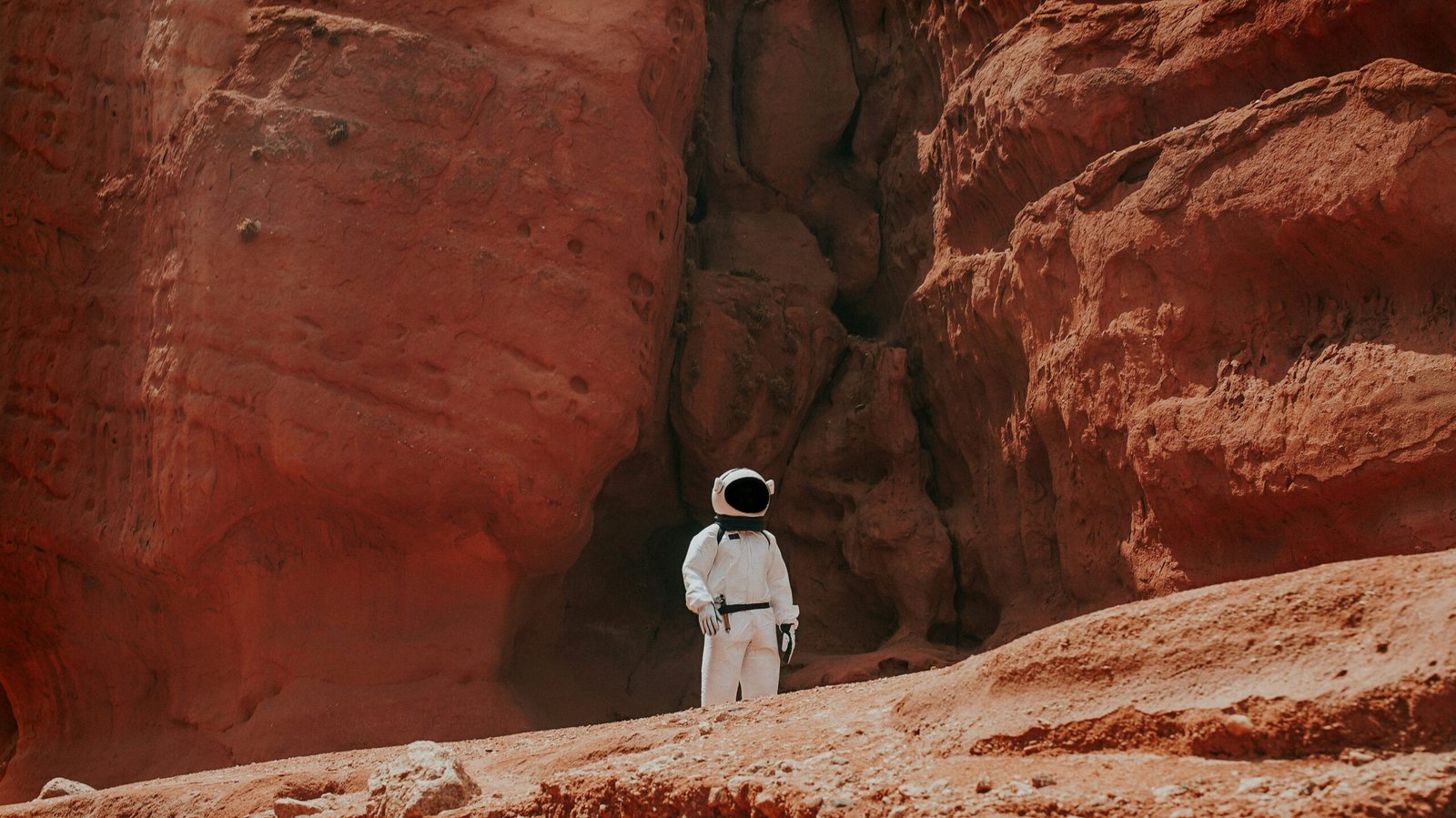
NASA’s Perseverance rover has uncovered what scientists are calling the most compelling evidence yet for ancient microbial life on Mars. The discovery of a rock sample with distinctive leopard-like spots, dubbed “Cheyava Falls,” has reignited scientific debate about whether life once existed on the Red Planet. While the findings represent a significant breakthrough, researchers stress that definitive proof will require returning samples to Earth for comprehensive laboratory analysis.
The Cheyava Falls Discovery
The rover collected the sample, named Sapphire Canyon, from a rock formation in Neretva Vallis—an ancient river valley that once channeled flowing water across the Martian surface. What makes this discovery extraordinary is the combination of organic compounds alongside iron phosphate and iron sulfide minerals, a chemical signature that on Earth typically indicates microbial activity. These potential biosignatures represent the strongest evidence to date that Mars may have harbored life billions of years ago.
The Challenge of Proving Ancient Life
Despite the promising indicators, scientists remain deliberately cautious about declaring victory in the search for Martian life. The rover’s sophisticated instruments can detect and analyze chemical signatures, but they cannot definitively distinguish between biological and non-biological processes that might produce similar results. This limitation underscores a fundamental challenge in astrobiology: proving that observed phenomena resulted from living organisms rather than purely geological processes.
“Astrobiological claims, particularly those related to the potential discovery of past extraterrestrial life, require extraordinary evidence,” said Katie Stack Morgan of NASA’s Jet Propulsion Laboratory.
The Critical Need for Sample Return
The Perseverance mission was specifically designed as the first phase of an ambitious sample return program, with the ultimate goal of bringing Martian rocks back to Earth for detailed laboratory analysis. However, the Mars Sample Return program faces mounting challenges, including escalating costs that have ballooned to an estimated $11 billion and complex technical hurdles that have pushed timelines well into the 2030s.
NASA is now exploring alternative approaches, including the possibility of sending more advanced analytical laboratories directly to Mars. While this could potentially provide faster results, it would require breakthrough advances in miniaturized scientific instruments and substantial new investment in mission development.
Lessons from Mars Exploration History
The current findings resonate with decades of Mars exploration, particularly NASA’s pioneering Viking missions of the 1970s. Recent reanalysis of Viking data has led some scientists to speculate that those early experiments may have inadvertently destroyed potential Martian microbes through their testing protocols. This sobering possibility highlights the delicate nature of life detection and the importance of designing experiments that preserve rather than destroy the very evidence they seek to find.
Key Takeaways
- Perseverance has identified the strongest potential biosignatures yet discovered on Mars, including organic compounds and minerals associated with microbial life on Earth.
- Definitive proof of ancient Martian life requires returning samples to Earth, but the sample return program faces significant budget and technical obstacles.
- Historical lessons from Viking underscore the critical importance of carefully designed life-detection protocols that preserve potential evidence.
The Path Forward
The search for ancient life on Mars stands at a pivotal moment. While the Cheyava Falls discovery represents the most tantalizing evidence yet uncovered, it also highlights the gap between intriguing possibilities and scientific certainty. As NASA grapples with the challenges of sample return and the broader scientific community debates the best path forward, one thing remains clear: answering the fundamental question of whether life once existed beyond Earth will require sustained commitment, innovative solutions, and extraordinary scientific rigor. Each discovery brings humanity closer to understanding our place in the cosmos and whether we are truly alone in the universe.