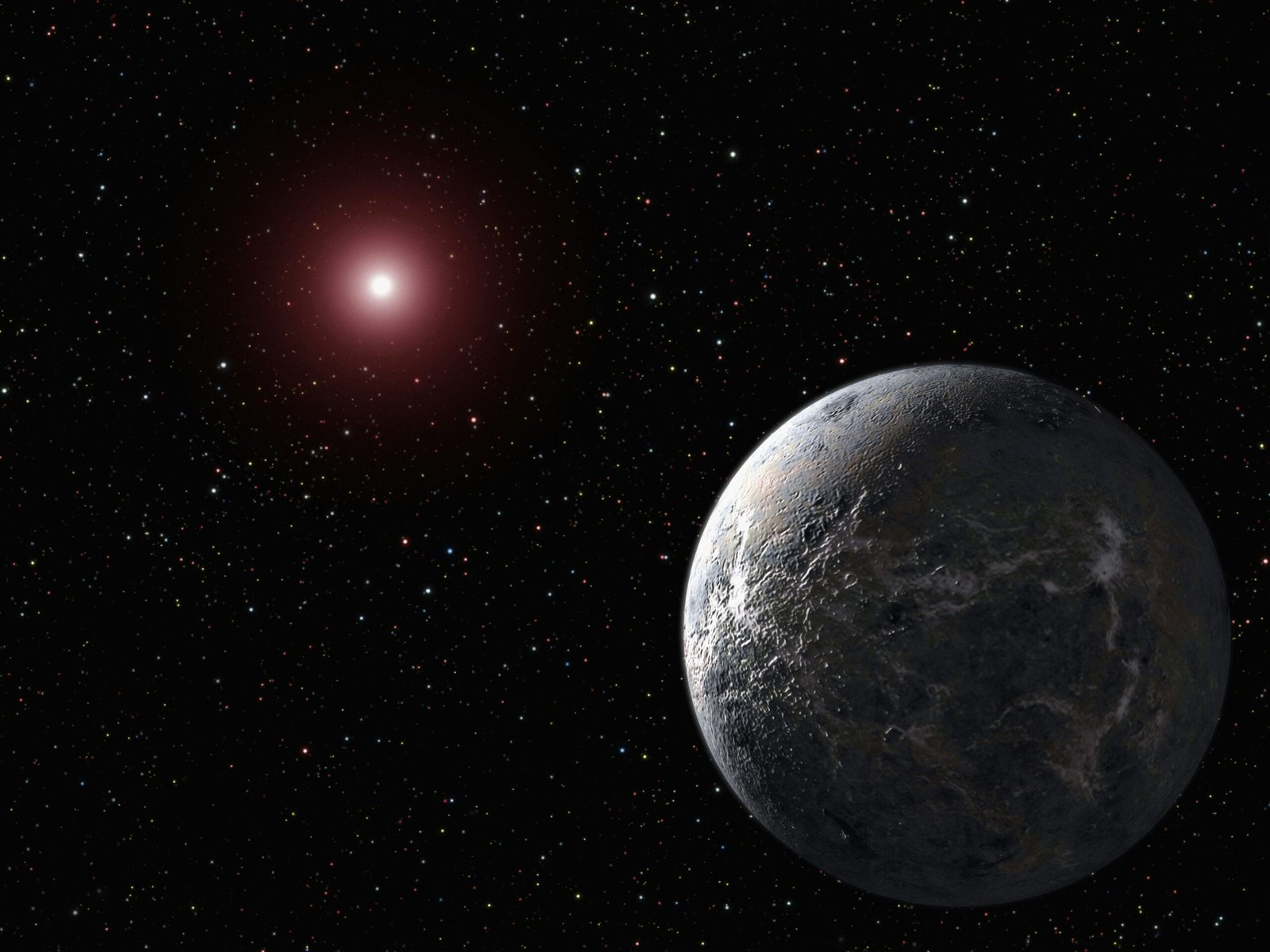
As humanity peers beyond our solar system’s boundaries, the search for an Earth-like exoplanet—a true celestial twin—has emerged as one of astronomy’s most compelling frontiers. With over 5,000 confirmed exoplanets cataloged to date, scientists are methodically narrowing the field to identify worlds that could harbor life. This systematic hunt, powered by revolutionary telescopic technology and driven by fundamental questions about our cosmic uniqueness, is fundamentally reshaping how we understand planetary systems and habitability.
Defining Earth 2.0: More Than Just Size and Distance
The search for Earth 2.0 extends far beyond finding a planet of similar size. Scientists seek worlds orbiting within their star’s habitable zone—the precise orbital distance where surface temperatures allow liquid water to exist. This “Goldilocks zone” represents the sweet spot where conditions are neither scorching hot nor frozen solid, creating the potential for life-sustaining environments.
Kepler-452b stands as perhaps the most celebrated Earth analog discovered to date. Located 1,400 light-years away, this exoplanet orbits a G-type star remarkably similar to our Sun every 385 days. At roughly 1.6 times Earth’s diameter, Kepler-452b likely possesses a rocky composition and has basked in its star’s habitable zone for over 6 billion years—providing ample time for complex chemistry to evolve. Yet critical questions remain: Does it retain a protective atmosphere? Could liquid water persist on its surface?
A Gallery of Promising Worlds
The exoplanet catalog reveals remarkable diversity among potentially habitable worlds. The TRAPPIST-1 system, a mere 40 light-years from Earth, hosts seven terrestrial planets packed into an orbit smaller than Mercury’s. Three of these worlds—TRAPPIST-1e, f, and g—reside squarely within the habitable zone, with TRAPPIST-1e showing particularly promising characteristics for atmospheric retention and surface water.
Other standout candidates include Proxima Centauri b, orbiting our nearest stellar neighbor just 4.2 light-years away, and TOI-715 b, a recently discovered “super-Earth” that offers tantalizing prospects for atmospheric analysis. Each discovery adds crucial data points to our understanding of how planetary systems form and evolve, while challenging assumptions about what constitutes a habitable world.
“The challenge lies not just in discovering these planets, but in determining their true nature. Are they rocky, do they have atmospheres, and could they support life as we know it?”
Dr. Moiya McTier, Astrophysicist
Next-Generation Tools Revolutionize the Hunt
The James Webb Space Telescope has already begun transforming exoplanet science, analyzing atmospheric compositions with unprecedented precision. JWST’s infrared capabilities can detect water vapor, carbon dioxide, and other biosignature gases in exoplanet atmospheres—data that was impossible to obtain just a decade ago. Meanwhile, upcoming missions like the Nancy Grace Roman Space Telescope and the Extremely Large Telescope will push these capabilities even further.
These technological leaps enable astronomers to move beyond simple detection toward detailed characterization. Rather than merely cataloging distant worlds, scientists can now probe their atmospheric chemistry, surface conditions, and potential for habitability with remarkable sophistication.
Key Takeaways
- Over 5,000 confirmed exoplanets provide a vast catalog for identifying potentially habitable worlds.
- Kepler-452b and TRAPPIST-1e represent the most promising Earth analogs discovered to date.
- The James Webb Space Telescope is revolutionizing our ability to analyze exoplanet atmospheres and compositions.
- Proximity matters: nearby systems like TRAPPIST-1 and Proxima Centauri offer the best opportunities for detailed study.
The Broader Implications
The quest for Earth’s twin transcends simple scientific curiosity—it addresses fundamental questions about life’s prevalence in the universe and humanity’s cosmic significance. Each Earth-like world we discover provides crucial insights into planetary formation, atmospheric evolution, and the conditions necessary for life to emerge and thrive. As our catalog of potentially habitable worlds grows, we edge closer to answering one of science’s most profound questions: Are we alone?