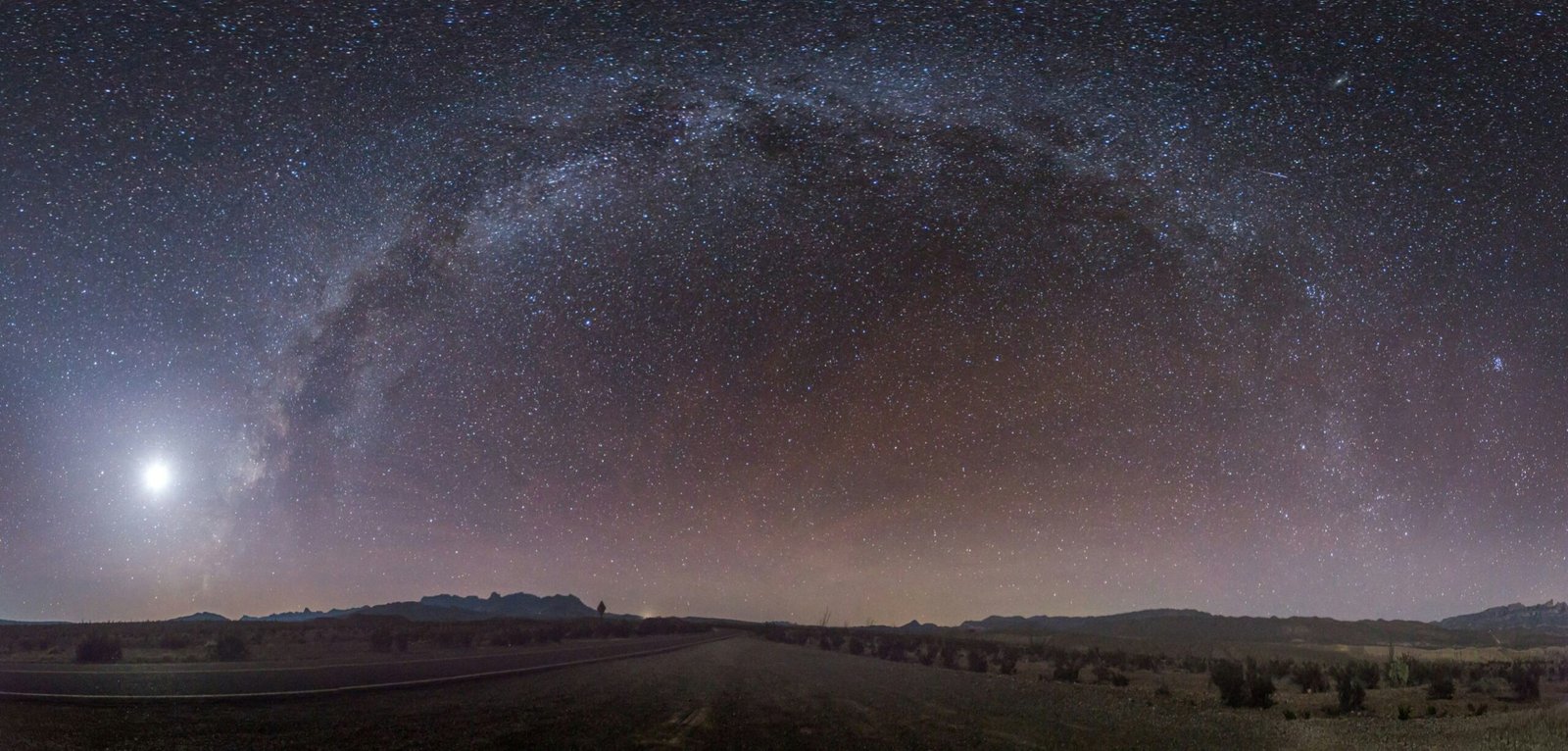
The cosmos continues to surprise us with mysterious visitors that challenge our understanding of the universe. Recent discoveries of enigmatic interstellar objects have captivated astronomers worldwide, forcing scientists to reconsider fundamental assumptions about what travels through the void between stars.
Punctum: A Radio Beacon from Another Galaxy
Deep in the galaxy NGC 4945, astronomers have discovered an object so unusual it defies easy classification. Named “Punctum,” this cosmic anomaly was detected by the Atacama Large Millimeter/submillimeter Array (ALMA) and exhibits properties that push the boundaries of known astrophysics.
What makes Punctum extraordinary is its intense radio brightness—it outshines typical magnetars and rivals the most powerful supernovae in our galaxy at millimeter wavelengths. Yet this radio giant remains completely invisible to optical and X-ray telescopes, creating a puzzling contradiction that has astronomers scrambling for explanations.
The object’s compact structure and organized magnetic field point to synchrotron radiation—a signature of extremely energetic processes involving high-speed charged particles. However, no known astronomical phenomenon fully explains Punctum’s unique combination of characteristics, suggesting we may be witnessing an entirely new class of cosmic object.
Our Solar System’s Mysterious Visitors
While Punctum lurks in a distant galaxy, our own solar system has welcomed its share of interstellar wanderers. ‘Oumuamua, discovered in 2017, became the first confirmed visitor from beyond our solar system and immediately challenged astronomers’ expectations.
This elongated object—roughly ten times longer than it is wide—tumbled through space while exhibiting dramatic brightness variations. Its unusual acceleration away from the Sun, without the typical comet tail, sparked intense scientific debate about its composition and origin. Some researchers proposed it could be a fragment of solid hydrogen, while others suggested more exotic explanations.
The mystery deepened with the arrival of 2I/Borisov (also known as 3I/ATLAS), the second confirmed interstellar object. Unlike ‘Oumuamua’s rocky appearance, this visitor displayed clear comet-like behavior with a visible tail. However, its unusual glow and chemical composition have raised new questions about the diversity of objects drifting between stars.
Webb Telescope Unlocks Chemical Secrets
The James Webb Space Telescope has revolutionized our ability to study these cosmic visitors, providing unprecedented detail about their composition and behavior. Webb’s observations of 2I/Borisov revealed an unusually high concentration of carbon dioxide relative to water—a ratio that offers tantalizing clues about its birthplace.
This chemical signature suggests the comet formed in a region where carbon dioxide could freeze out before water, likely near the CO2 ice line of its parent star system. Such detailed compositional analysis represents a breakthrough in interstellar archaeology, allowing scientists to probe the conditions around distant stars through the messengers they send our way.
As these objects continue their journeys through our solar system, NASA’s Mars Reconnaissance Orbiter and other instruments stand ready to capture additional data, potentially revealing more secrets about the materials and processes that shape planetary systems across the galaxy.
Key Takeaways
- Punctum represents a potentially new class of astronomical object, challenging existing models with its extreme radio brightness and optical invisibility.
- Interstellar visitors like ‘Oumuamua and 2I/Borisov demonstrate the remarkable diversity of objects traveling between star systems.
- Advanced instruments like the James Webb Space Telescope are transforming our ability to analyze the composition and origins of these cosmic wanderers.
The Frontier Ahead
These discoveries mark just the beginning of a new era in astronomy. As detection capabilities improve and more interstellar objects are identified, we’re building a catalog of the universe’s traveling population. Each visitor carries unique information about distant star systems, offering glimpses into planetary formation processes and cosmic evolution on a galactic scale.
The study of interstellar objects promises to bridge the gap between our solar system and the broader galaxy, transforming these mysterious wanderers from cosmic curiosities into valuable scientific ambassadors from the depths of space.