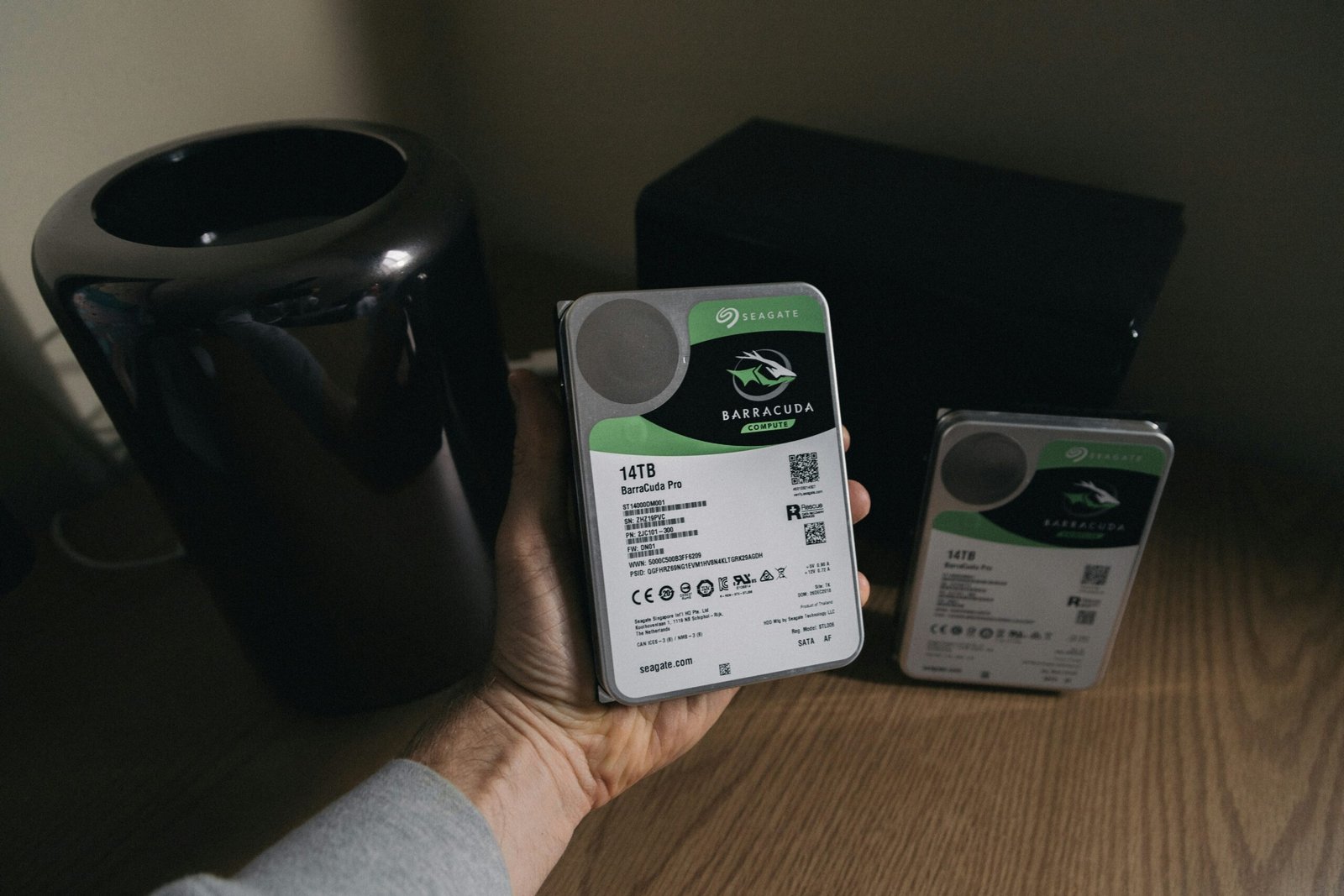
In the rapidly evolving world of data storage, Seagate has positioned itself at the forefront with the introduction of its 30TB HAMR (Heat-Assisted Magnetic Recording) drives. These drives, part of the Exos M and IronWolf Pro lines, are designed to meet the increasing demands of AI-driven data centers and enterprises seeking scalable, high-density storage solutions.
These cutting-edge drives leverage Seagate’s Mozaic 3+ platform, which combines advanced HAMR technology with innovative design, allowing data to be stored at a density previously unseen in traditional hard drives. With this technology, Seagate aims to double the capacity of standard drives, offering a significant leap in storage capabilities while maintaining energy efficiency.
The Technology Behind the Capacity
The breakthrough in Seagate’s new drives lies in the HAMR technology, which utilizes a laser to heat the recording medium, allowing data to be written at much higher densities. This method significantly increases the areal density, achieving up to 3TB per platter. This technological advancement is crucial as it enables Seagate to offer 30TB and even plans for 36TB drives, positioning itself ahead of competitors like Western Digital and Toshiba.

This innovation is timely, with AI and machine learning applications demanding vast amounts of data storage. The high capacity of these drives supports AI workloads efficiently, catering to the needs of data centers looking to lower power consumption while maximizing data throughput.
Market Implications and Future Prospects
Seagate’s new drives are not just about capacity; they are about transforming the storage landscape to support next-generation technologies. As data sovereignty laws and edge computing trends continue to grow, the need for localized, high-capacity storage solutions becomes more critical. Seagate’s drives offer a strategic advantage, enabling enterprises to scale their infrastructure to meet these demands without compromising on performance.
Looking ahead, Seagate’s roadmap includes further advancements in HAMR technology, with plans to introduce even larger capacities. This progression will be crucial as the industry anticipates a surge in data generated by AI and IoT applications. By pushing the boundaries of storage technology, Seagate is not just keeping pace with the market but setting the pace for future developments.
Conclusion
Seagate’s 30TB HAMR drives are a significant milestone in the data storage industry, offering unprecedented capacity and efficiency for AI-centric data centers. As the demand for high-density storage grows, Seagate’s innovations are poised to play a pivotal role in shaping the future of enterprise storage solutions. By continuously refining their technology, Seagate is not only addressing current needs but also paving the way for future advancements in data storage technology.