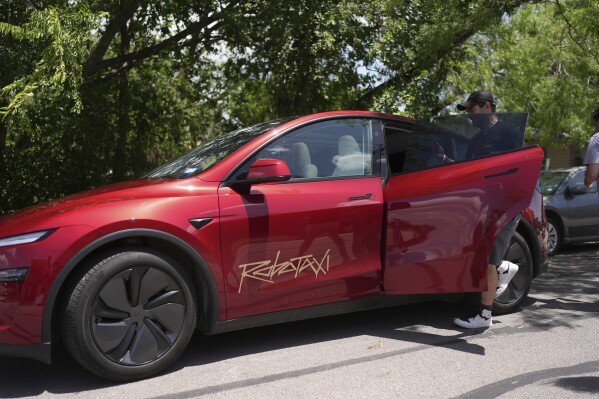
In the vibrant tech hub of Austin, Texas, Tesla has embarked on a significant trial of its robotaxi service. However, this ambitious venture is not without its hurdles. The rollout, which began with an exclusive group of passengers, is a reflection of Tesla’s cautious yet determined approach to autonomous driving technology.

The Inception of Tesla’s Robotaxi Service in Austin
Last weekend marked a milestone as Tesla’s robotaxis quietly began navigating the streets of Austin. This pilot program, which includes a human safety monitor, is limited to a select group of Tesla enthusiasts and influencers. This soft launch comes as the company maneuvers through newly established state regulations requiring permits and safety assurances for autonomous vehicles.
While the rollout is a step forward, it is a far cry from CEO Elon Musk’s earlier projections of fully autonomous taxis dominating city streets. This tempered approach underscores the complexity and regulatory challenges inherent in deploying such cutting-edge technology.
Regulatory Hurdles and Safety Measures
Governor Greg Abbott’s signing of a new law has introduced stringent requirements for autonomous vehicle operations in Texas. These include obtaining a state permit, ensuring compliance with safety standards, and coordinating with first responders in emergencies. Tesla must also demonstrate its vehicles’ ability to safely halt if the self-driving system fails.

This legislative framework reflects a cautious optimism towards driverless technology, balancing innovation with public safety. Tesla’s current operations involve a human monitor to intervene if necessary, aligning with these regulatory demands.
Implications for Tesla and the Broader Market
With Tesla’s stock already under pressure, the stakes are high for the success of its robotaxi program. Rivals like Waymo have made significant strides, deploying fully autonomous vehicles in multiple cities. Tesla’s cautious pace may seem prudent, but it also highlights the competitive pressures and technological hurdles the company faces.
As Tesla’s robotaxis continue their trial runs, the company must not only refine its technology but also win public trust. The road to a fully autonomous future is fraught with challenges, but the potential rewards for success are immense, promising to revolutionize urban transportation.

Looking Forward
As Tesla navigates these regulatory landscapes and technological challenges, the question remains: How soon can we expect a broader rollout of robotaxis? While the timeline to a full-scale deployment is still uncertain, the pilot in Austin is a critical step. Success in this endeavor could pave the way for expansion into other major cities, such as San Francisco and Los Angeles.
For now, Tesla’s cautious yet ambitious approach in Austin sets the stage for what could be a transformative era in urban mobility, with implications that extend far beyond the streets of Texas.