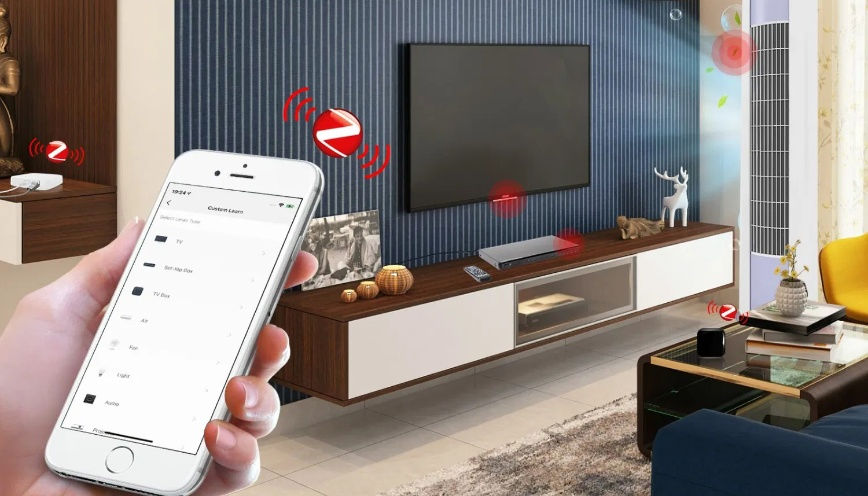
With a smart speaker, you can stream music from popular streaming services, set alarms and control compatible smart home devices with voice control using Amazon Alexa or Google Assistant.
Smart security systems monitor your home from a distance and alert you of suspicious activity using HD video, night vision and AI person/package detection technologies.
1. Smart Speaker
Smart speakers are at the core of any connected home, serving as personal assistants, home hubs, alarm clocks and party hosts. Our top choices — Amazon Echo Gen 4, Nest Audio G410 and JBL Authentics 300 — use either Alexa or Google Assistant.
Apple HomePod is another option for diehard Apple fans, however it requires an iOS device and only works with devices and services compatible with HomeKit. We suggest the Flic Duo as an easily accessible physical button to control all your connected gadgets without using an app or voice control.
2. Smart Doorbell
No matter where you are: work, virtual meeting or just cooking dinner, smart doorbells provide you with peace of mind by alerting you when someone knocks at the door without having to open it yourself. Many even include two-way audio communication capabilities so you can interact with visitors even when not home!
Eufy Video Doorbell Dual performed well in Consumer Reports tests, with quick response times for alerts and live feed loading as well as outstanding data security and video quality scores. Furthermore, its color night vision, activity zones and motion sensor can trigger Alexa routines for extra security.
3. Smart Thermostat
Smart thermostats allow you to remotely set a heating or cooling schedule, save energy by adapting to your individual patterns over time, and even turn off the heat when leaving home. Some models even include remote room sensors and proximity detectors which recognize when someone arrives home and can automatically warm or cool it before your arrival.
Find a thermostat compatible with the voice assistant of your choice – Amazon Alexa, Google Assistant or Siri are among your options – that also supports IFTTT and Matter compatibility for easier management of other devices.
4. Smart Lighting
Increase energy efficiency with smart lighting that shuts off automatically at certain times or adjusts color to create the ideal ambiance. Some lights also integrate with home security systems or use geofencing capabilities to activate when someone enters your property.
If you want to avoid apps altogether, look for smart switches, dimmers and plugs with Matter Over Thread compatibility; these devices work seamlessly with voice assistants and other devices. Some even feature physical buttons that enable you to perform routines or multiple commands without using your phone!
5. Smart Appliances
Smart appliances provide convenience and peace of mind, as they can be controlled remotely using mobile apps and provide feedback on energy use, helping homeowners reduce monthly utility costs.
These appliances can monitor and optimize run times to fit individual schedules, take advantage of cheaper off-peak power rates and maximize solar energy utilization. Furthermore, they notify smartphones if issues arise or someone forgets to close the refrigerator door.
These devices provide users with an efficient solution that saves both time and effort when away from home, such as preheating ovens or beginning laundry loads – or even keeping an eye on pets!
6. Smart Sensors
Sensors are at the core of every smart home. These matchbox-sized devices monitor conditions and send alerts directly to your phone whenever something changes.
Sometimes you just need an easy, silent way to control your gadgets without using apps or voice assistants. A smart button like Flic Duo provides this fast, silent solution; its advanced recognition algorithm recognizes single, double, long press as well as twist and flick gestures – providing over twelve potential commands in just one device! Plus it’s Matter compatible, making integration into existing smart home ecosystems simple.
7. Smart Cameras
Smart cameras go beyond traditional doorbells by transmitting video footage directly to your phone and can deter robberies by recording all visitors who come through your front door and two-way audio, so you can converse with guests or delivery personnel even when not at home.
Wired cameras typically offer superior image quality, though wireless models may also be suitable. You can control them using an app, voice assistants such as Alexa or Siri, smart displays or display panels; some even come equipped with built-in microphones for hands-free control.
8. Smart Locks
Smart locks offer more security than their traditional counterparts, with features like DoorSense that alert you if you leave your door open. In addition, smart locks allow for the convenient issuance of virtual keys to dog walkers, housekeepers and tradespersons and instant cancellation if needed.
Our top selection is a retrofit lock that installs over existing deadbolts and works with app control, keypad entry and voice assistants such as Alexa, Google Assistant and Siri. Furthermore, this product boasts advanced security and compatibility with Matter.
9. Smart Plugs
Smart plugs offer an efficient and cost-effective way to harness voice assistants and automate everyday appliances like lamps, fans and slow cookers. Look for models with energy management features for maximum savings over time.
This TP-Link Kasa model fulfills all the basics and integrates easily with HomeKit and Alexa routines, plus supports Thread and Matter smart home standards – making it more reliable than older Wi-Fi models which may stop working altogether.
10. Smart Sensors
Smart home devices can save energy, make your house safer and more comfortable, streamline daily tasks and even provide entertainment. From controlling lights, locks, thermostats, cameras, curtains/blinds or music systems using Alexa/Google Assistant/HomeKit etc there’s a device out there to meet every need!
Smart sensors combine sensor transducers with microprocessors for added intelligence, signal processing and communication capabilities. They can self-diagnose sensor faults and reduce measurement uncertainty using online averaging techniques – as well as decrease operating costs while improving supply chain efficiency and increasing customer value.